Imagine you’ve just won a contract to install security cameras in a government-adjacent building — a federally funded health clinic, a school district office, or a transportation hub. You order what looks like a solid 4K wired camera, it arrives, and then your client’s IT director flags it: the camera’s chipset is manufactured by a company the U.S. government has banned from federal contracts. The whole order goes back. Project delayed. Trust damaged.
This is exactly the kind of situation the NDAA — the National Defense Authorization Act, a U.S. federal law renewed annually — was designed to address. Section 889 of the 2019 NDAA prohibits federal agencies (and contractors doing business with them) from purchasing video surveillance equipment made by five named Chinese manufacturers: Hikvision, Dahua, Huawei, Hytera, and ZTE, or any of their subsidiaries. Even if a camera is rebranded under a different name, if the underlying chipset or firmware traces back to those companies, it is non-compliant. For integrators and IT buyers working in regulated environments, NDAA compliance is not a checkbox — it is a prerequisite before the conversation about resolution or night vision even starts.
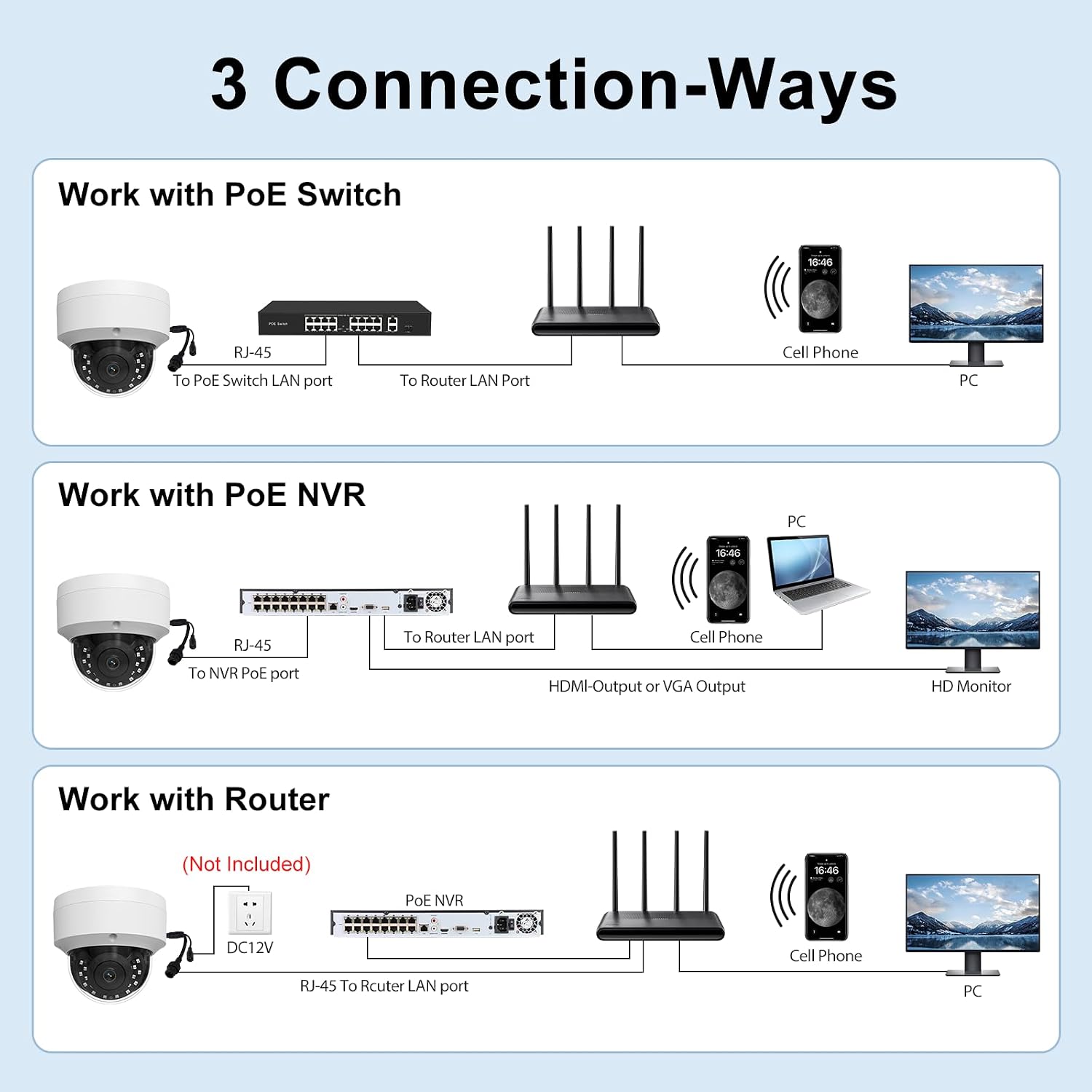
This guide compares the leading NDAA-compliant PoE (Power over Ethernet — a single cable that carries both data and electrical power to the camera) cameras across the specs that actually move the needle on real deployments: resolution, low-light performance, and the true per-camera cost once you factor in licensing, storage, and installation.
| EDITOR'S PICK[REOLINK 12MP PoE IP Camera Outd…](https://www.amazon.com/dp/B0GF7X4M1Y?tag=greenflower20-20) | Mid-tier[REOLINK 4K/8MP Wired Security P…](https://www.amazon.com/dp/B07K74GWX5?tag=greenflower20-20) | Budget pick[Anpviz 5MP PoE Camera](https://www.amazon.com/dp/B0FKG25JVC?tag=greenflower20-20) | |
|---|---|---|---|
| Resolution | 12MP | 8MP/4K | 5MP |
| Night Vision | 700lm Color | 100ft IR | Smart Dual Light |
| AI Detection | Human/Vehicle/Pet | Human/Vehicle/Pet | AI Human |
| MicroSD Max | 512GB | 512GB | — |
| NDAA Compliant | — | — | ✓ |
| Price | $90.99 | $71.99 | $32.49 |
| See on Amazon → | See on Amazon → | See on Amazon → |
Why “NDAA-Compliant” Is Harder to Verify Than It Sounds
The compliance question has sharpened considerably since 2022. As reported by IPVM in their “NDAA Section 889 Camera Manufacturer Compliance Guide” (updated 2025), several camera brands that initially marketed themselves as compliant were later found to contain components from restricted suppliers — either in their SoC (system-on-chip, the brain of the camera) or in bundled NVR firmware. The burden of verification falls on the integrator, not the end customer.
The cleanest way to verify compliance is to examine the manufacturer’s supply chain declaration, cross-reference the chipset vendor, and check whether the brand has a published Trusted Products List entry through a recognized body. As of mid-2026, the brands with the strongest documented compliance posture for PoE IP cameras include:
- Axis Communications (Swedish; Artpec chipsets, proprietary)
- Hanwha Vision (Korean; Wisenet chipsets, proprietary)
- Avigilon (Canadian; owned by Motorola Solutions)
- Bosch Security Systems (German)
- Verkada (U.S.-based; cloud-first but sells PoE hardware)
- Vivotek (Taiwanese; compliance should be verified per model — not all product lines use fully compliant components)
Security Sales & Integration’s 2024 federal procurement coverage notes that Axis and Hanwha are most frequently specified in government-adjacent projects precisely because their vertical integration — chip-to-firmware developed in-house — makes compliance documentation cleaner to produce during audits.
Resolution and Image Quality: Where the Specs Actually Matter
Resolution is where buyers frequently over-specify and overspend. PCMag’s 2025 coverage of the best wired security cameras notes that in indoor environments under 30 feet, a 4MP camera with a quality lens and sensor will outperform a budget 4K camera in real-world identification scenarios — because sensor size and low-light performance interact with resolution in ways that raw megapixel counts obscure.
Resolution tiers in practical terms:
| Resolution | Pixels | Best fit |
|---|---|---|
| 4MP (2560×1440) | ~3.7 MP effective | General indoor, retail aisles |
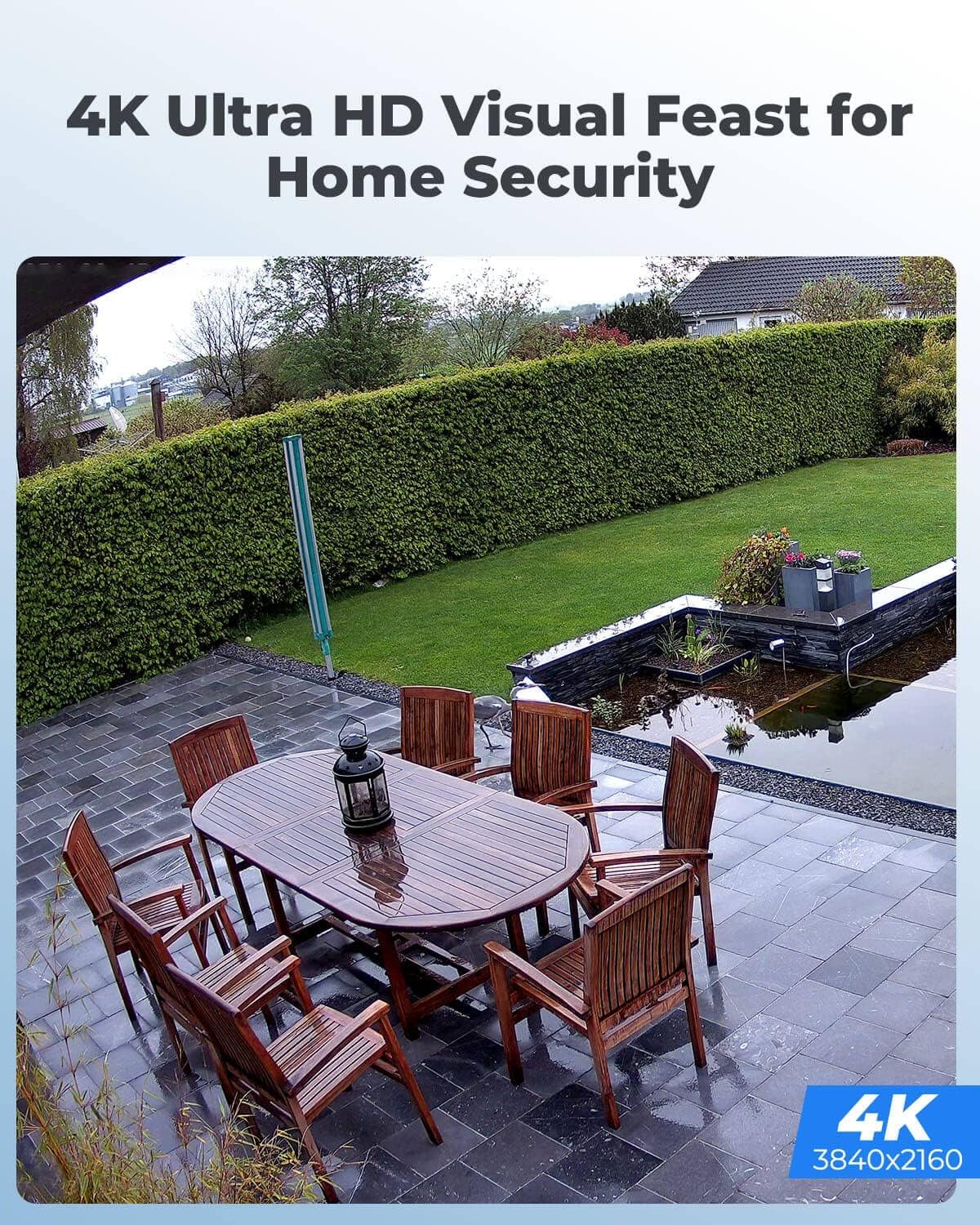
| 8MP / 4K (3840×2160) | ~8.3 MP | Parking lots, wide lobbies, license plate adjacency |
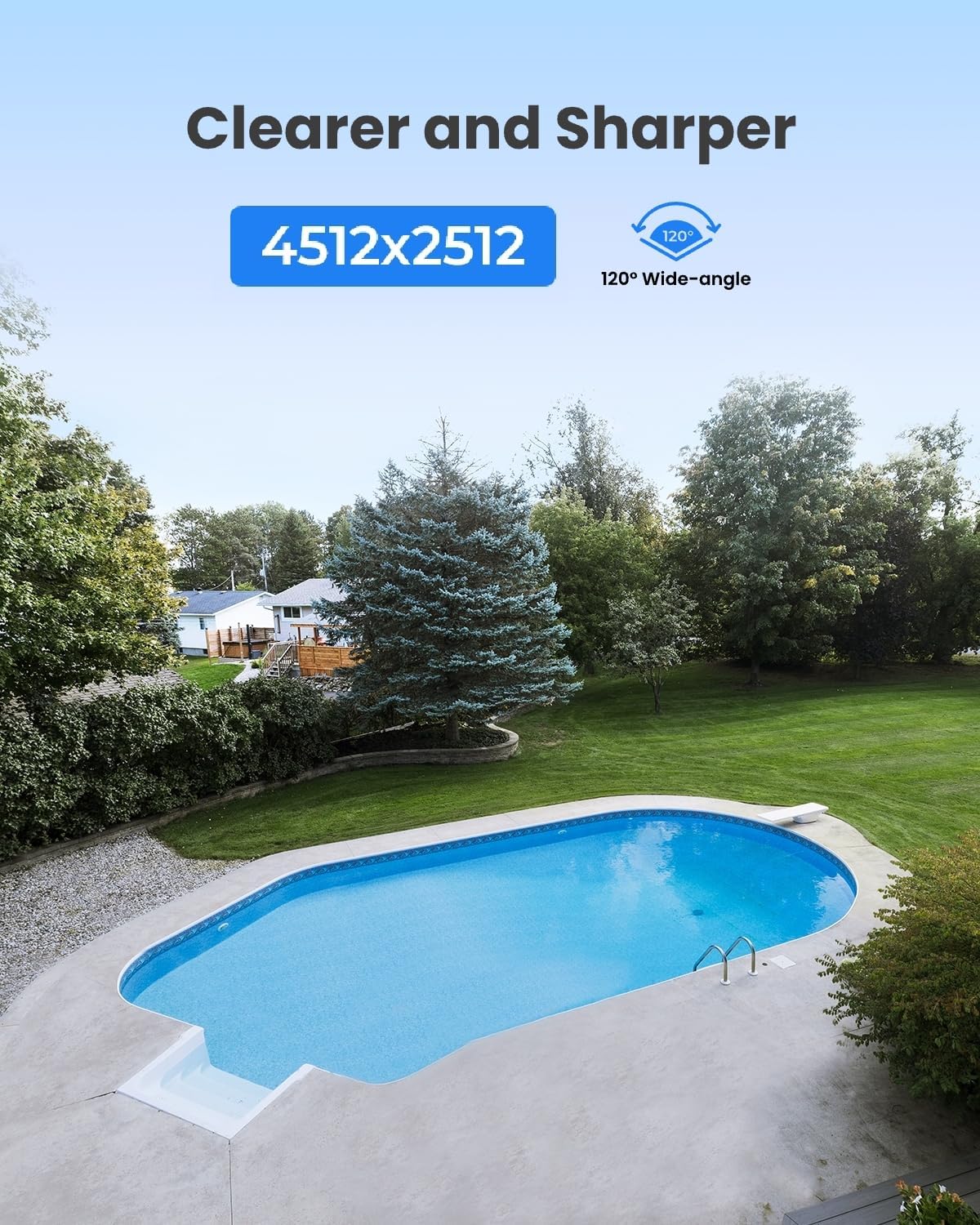
| 12MP+ | 12–20 MP | Large open areas, forensic-grade detail |
The following three camera lines represent the budget, mid-tier, and premium tiers of the current NDAA-compliant PoE market.
Hanwha Vision QNV-8080R — Best Value for Private Commercial Deployments
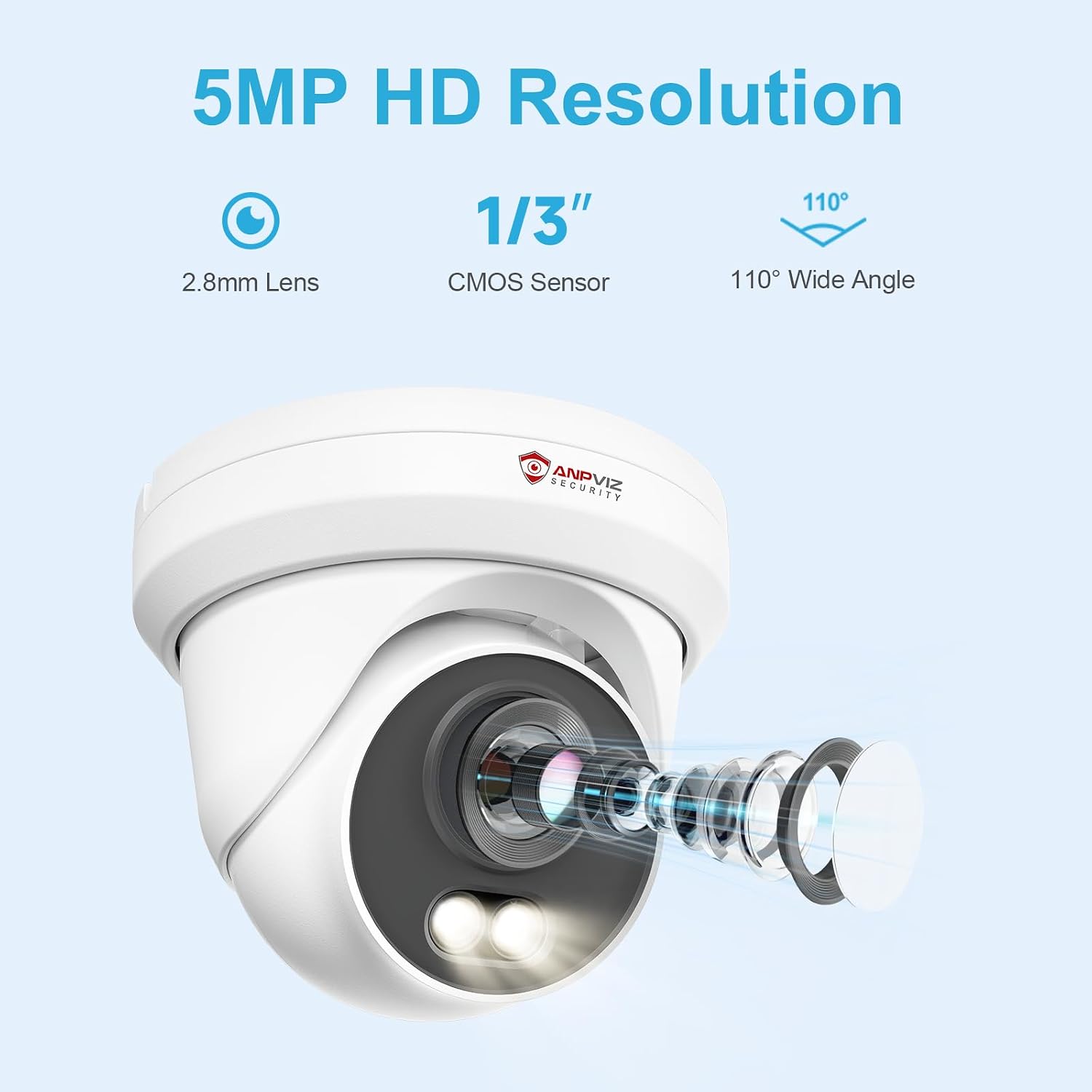
The Hanwha Vision QNV-8080R is a 5MP outdoor dome rated at 2560×1920 resolution running on Hanwha’s Wisenet 5 chipset. Its IR illuminators reach 30 meters (roughly 98 feet), and its Wide Dynamic Range (WDR — the camera’s ability to handle scenes where bright and dark areas coexist, like a doorway backlit by sunlight) is rated at 120dB, competitive with Axis’s equivalent outdoor tier. IPVM’s “Axis vs. Hanwha vs. Avigilon Image Quality Shootout” (2025) rates the Wisenet 5 chipset’s night performance as matching Axis Lightfinder performance in IR-illuminated outdoor scenarios at equivalent price points.
Street pricing in the U.S. market as of Q2 2026 runs approximately $180–$230 per unit at distribution.
Anpviz
$32.49
In stock on Amazon
Check price on AmazonAxis P3245-V — Best for Compliance-Critical and Mixed-VMS Environments
The Axis P3245-V is a 4MP indoor dome running at 2688×1520 at 30fps with Axis’s Lightfinder 2.0 technology, rated for useful color imaging down to 0.1 lux (roughly a very dim corridor with emergency lighting only). Operators consistently note that the P3245-V holds color detail in parking structures where competing cameras switch to washed-out black-and-white. Axis’s Artpec chipset and publicly available supply chain declarations make compliance documentation straightforward for government-adjacent audits, a point highlighted in Security Sales & Integration’s 2024 federal procurement coverage.
Street pricing runs approximately $280–$340 per unit at U.S. distribution before VMS licensing.
REOLINK
$71.99
In stock on Amazon
Check price on AmazonBosch FLEXIDOME 5100i — Best for Large Multi-Camera Deployments with Analytics in Scope
The Bosch FLEXIDOME 5100i is a 5MP outdoor dome rated at 2560×1920 at 30fps with an IP66/IK10 weatherproofing and impact-resistance rating per IEC standards. Its defining specification is built-in Essential Video Analytics (EVA), which handles line-crossing and intrusion detection on-camera without requiring a VMS analytics license. As Security Info Watch’s “PoE Camera Deployment Best Practices for SMB and Enterprise” (2024) notes, per-channel analytics licensing from major VMS vendors can run $150–$600 per camera depending on the platform and module tier — a cost that Bosch’s on-camera EVA eliminates entirely for standard detection scenarios.
Street pricing runs approximately $290–$370 per unit, but the on-camera analytics savings change the total cost calculation significantly on larger sites.
REOLINK
$90.99
In stock on Amazon
Check price on AmazonNight Vision: IR vs. Starlight vs. Color Night Vision
This is the tradeoff that most buyers underestimate at spec time. Three distinct technologies are in play across the NDAA-compliant field.
IR (Infrared) illumination is the default in most cameras under $300. The camera projects invisible infrared light and produces a black-and-white image at night. Range claims matter but need interpretation: as documented in IPVM’s image quality reporting, useful identification range (faces, license plates) is typically 40–60% of a manufacturer’s stated illumination distance, because illumination range and identification range are different measurements.
Starlight and low-light color sensors (Axis Lightfinder, Hanwha’s WDR Pro in color mode) use a larger pixel pitch to gather more ambient light, producing color images in very dim conditions without IR illuminators. The tradeoff is a larger camera body and a higher per-unit cost. For retail environments where color is forensically important — identifying clothing color in a theft incident — Starlight-class sensors are worth the premium. For exterior perimeter coverage where presence detection matters more than color detail, standard IR is adequate.
Supplemental white-light illumination (full-color night vision, available on select Axis and Hanwha models) produces color images by firing a visible LED spotlight. The image quality is strong, but the visible light is intrusive and can trigger complaints in residential-adjacent deployments.
The decision rule: perimeter and parking favor IR; retail interiors, lobbies, and any scene where color identification matters should budget for Starlight-class sensors.
Real Per-Camera Cost: The Math That Changes the Decision
This is where most bids go sideways. The camera hardware is almost never the total cost.
True per-camera cost — mid-tier 5MP NDAA-compliant deployment, 10-camera site:
| Line item | Cost |
|---|---|
| Camera hardware (Hanwha QNV-8080R, street) | $200 |
| PoE switch port allocation (managed switch) | $35 |
| VMS license per camera (mid-tier platform) | $110 |
| Local storage allocation (NAS, amortized) | $40 |
| Installation labor (1.5 hrs at $85/hr) | $128 |
| True per-camera all-in cost | $513 |
Compare that to the camera’s $200 sticker price, and the risk of hardware-only comparisons becomes obvious. At the enterprise tier — platforms like Milestone XProtect Corporate or Genetec Security Center — per-channel licensing alone can run $200–$600 depending on analytics modules, as detailed in Security Info Watch’s “PoE Camera Deployment Best Practices for SMB and Enterprise” (2024).
Where Bosch’s on-camera analytics changes the math: If a VMS charges $150 per channel for line-crossing analytics and you are running 20 cameras, Bosch’s built-in EVA eliminates $3,000 in licensing costs from that deployment. That figure more than offsets the hardware premium versus Hanwha on any site above roughly 15 cameras.
The Axis premium in context: Axis cameras consistently carry a 30–60% hardware premium over Hanwha equivalents at the same resolution tier. That premium buys deeper VMS ecosystem integration (particularly with Milestone and Genetec), a longer firmware support cadence, and compliance documentation that is easier to present during federal audits. Security Sales & Integration’s 2024 federal procurement coverage reflects integrator consensus that for government-funded projects where the compliance paper trail is scrutinized as closely as image quality, the Axis premium is regularly judged worth paying. For private commercial deployments without federal contract exposure, Hanwha delivers comparable image quality at materially lower hardware cost.
Decision Framework: Matching Camera to Project Type
You are under letter of intent or scoping a bid right now. Here is the decision tree.
If the project has federal funding, a federal contractor client, or any government-adjacent compliance requirement: Specify Axis or Hanwha with current supply chain declarations in hand. Get the compliance documentation in writing from your distributor before finalizing the spec. Do not substitute a third-party branded camera without verifying the chipset independently — IPVM’s NDAA compliance reporting documents multiple cases where rebranded cameras failed verification.
If the project is private commercial and you are optimizing for image quality per dollar: Hanwha Vision QNV-series at 5MP delivers the best spec-per-dollar across the NDAA-compliant field. Specify the Wisenet 5 chipset explicitly — older Hanwha models carry less documented compliance history and should be avoided on projects where compliance may later become relevant.
If the deployment is 20 or more cameras and analytics are in scope: Run the Bosch FLEXIDOME 5100i math against your VMS analytics licensing cost before finalizing hardware selection. On most sites above 15 cameras with standard line-crossing and intrusion requirements, Bosch’s higher hardware cost is offset within the first year of avoided licensing fees.
If you are running SecuritySpy on macOS or Blue Iris on a single-site SMB deployment: Hanwha’s ONVIF compatibility is solid and the QNV-8080R integrates cleanly with both platforms. Axis works equally well but the hardware premium is difficult to justify if you are not leveraging Axis’s ACC environment or VAPIX API integrations.
If low-light color is a hard requirement — retail loss prevention, lobby identification: Specify Axis Lightfinder 2.0 or Hanwha’s WDR Pro color-capable models by SKU. Confirm the specific model number supports color-at-night mode; not every camera in a product family carries the Starlight-class sensor.
One practical factor that does not appear in spec sheets: lead times. As of mid-2026, popular Axis P-series SKUs are running 6–10 weeks through major U.S. distributors. Hanwha Vision typically ships faster from domestic distribution inventory. On a compressed project timeline, supply chain reality may determine the camera choice before the specification comparison does.